Welcome to the UCLA Tanigawa Lab
Why does the same disease affect individuals so differently? Some people progress faster, develop different complications, or respond differently to treatment. Precise understanding of the causal biology of disease heterogeneity leads to better prevention, management, and treatment.
Our group develops statistical models and computational tools to dissect interindividual differences in disease. We leverage our expertise in analyzing population-scale genomic data, predictive modeling, and therapeutic target discovery.
📣 Recruiting
We are recruiting at all levels. Please check the Join Us page for more information.
Meet the team

Yosuke Tanigawa, Ph.D.
Assistant Professor
Mapping the biological basis of heterogeneity in disease.
Disease heterogeneity dissection
Biomedical data science
Statistical genetics

Nabil Mohammed
PhD Student
Developing methods to uncover genetics of complex traits.
Statistical genetics
Functional genomics
Drug discovery

Melody Mao
PhD Rotation Student
First-year Bioinformatics PhD student rotating in the Tanigawa Lab in Fall 2026.
Systems biology
Genetic mechanisms of complex diseases
Bioinformatics

Ananya Rai
Graduate Student
Gene-by-sex interactions
Disease heterogeneity
Genome-Wide Association Studies

Jihye Lee
Graduate Student
Graduate student researching disease heterogeneity and genetic feature discovery using machine learning.
Deep Learning
Genetic Associations
Disease Heterogeneity

Ashley Do
Undergraduate Student
Undergraduate student interested in applying statistical methods to better understand and quantify pleiotropy.
Gene Latent Features
Polygenic Risk Scores
Personalized Medicine

Keira Hundhausen
Undergraduate Student
Undergraduate bioengineering student interested in using large-scale genomic and phenotypic data to predict aging.
Genome-Wide Association Studies
Bioinformatics
Protein Folding
Research Areas
Statistical genetics, computational genomics, precision medicine
We study the underlying biology of disease heterogeneity and develop statistical and computational methods to improve prevention, disease management, and treatment.
Active
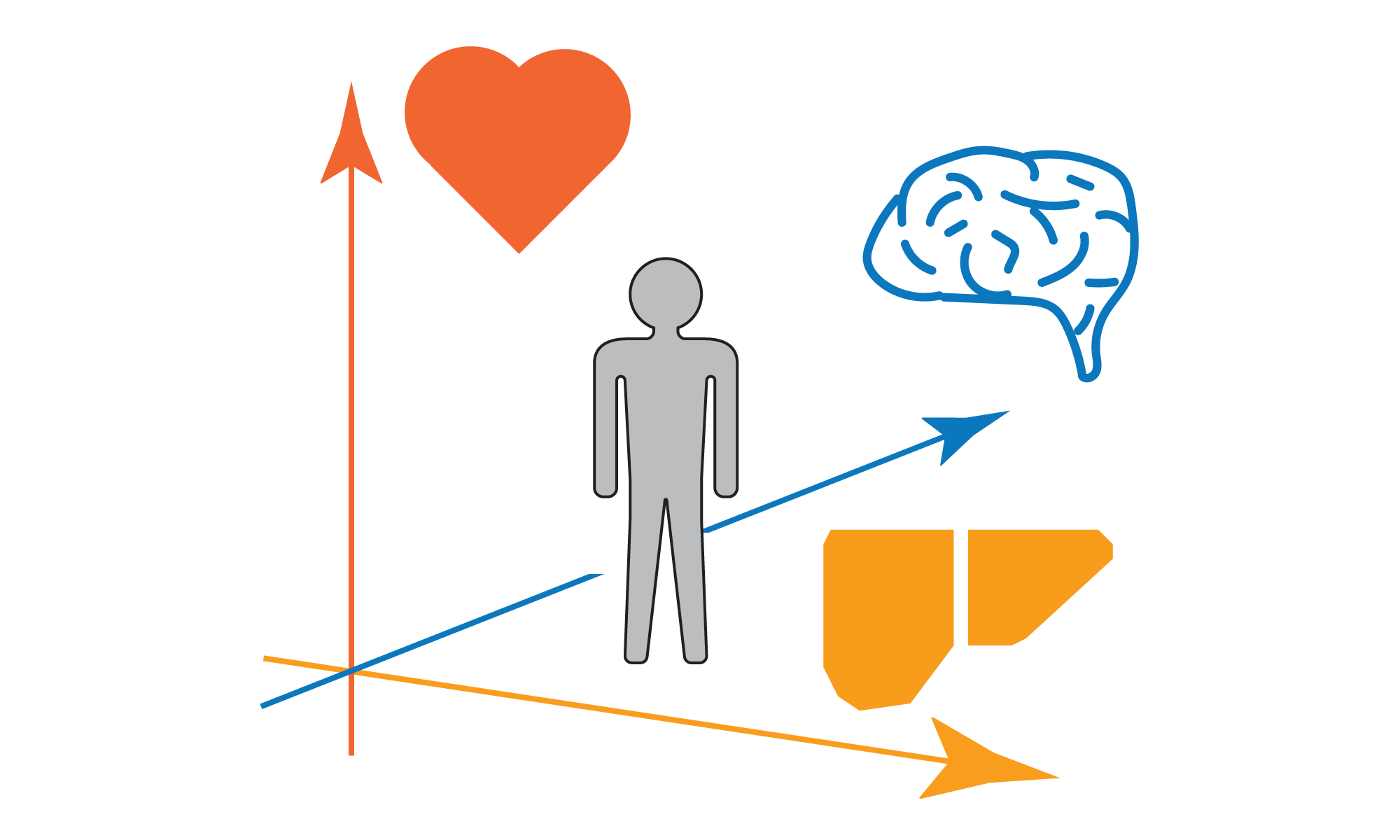
Disease heterogeneity dissection
Diagnosis for the same disease affects individuals differently. However, we don’t know how best to represent biologically meaningful axes of variation within a disease, beyond the standard case vs. control comparison or proxy measure of severity. We combine human genetics, causal inference, and modern AI to address this challenge.
Representation learning
Causal inference
Biobanks
Active
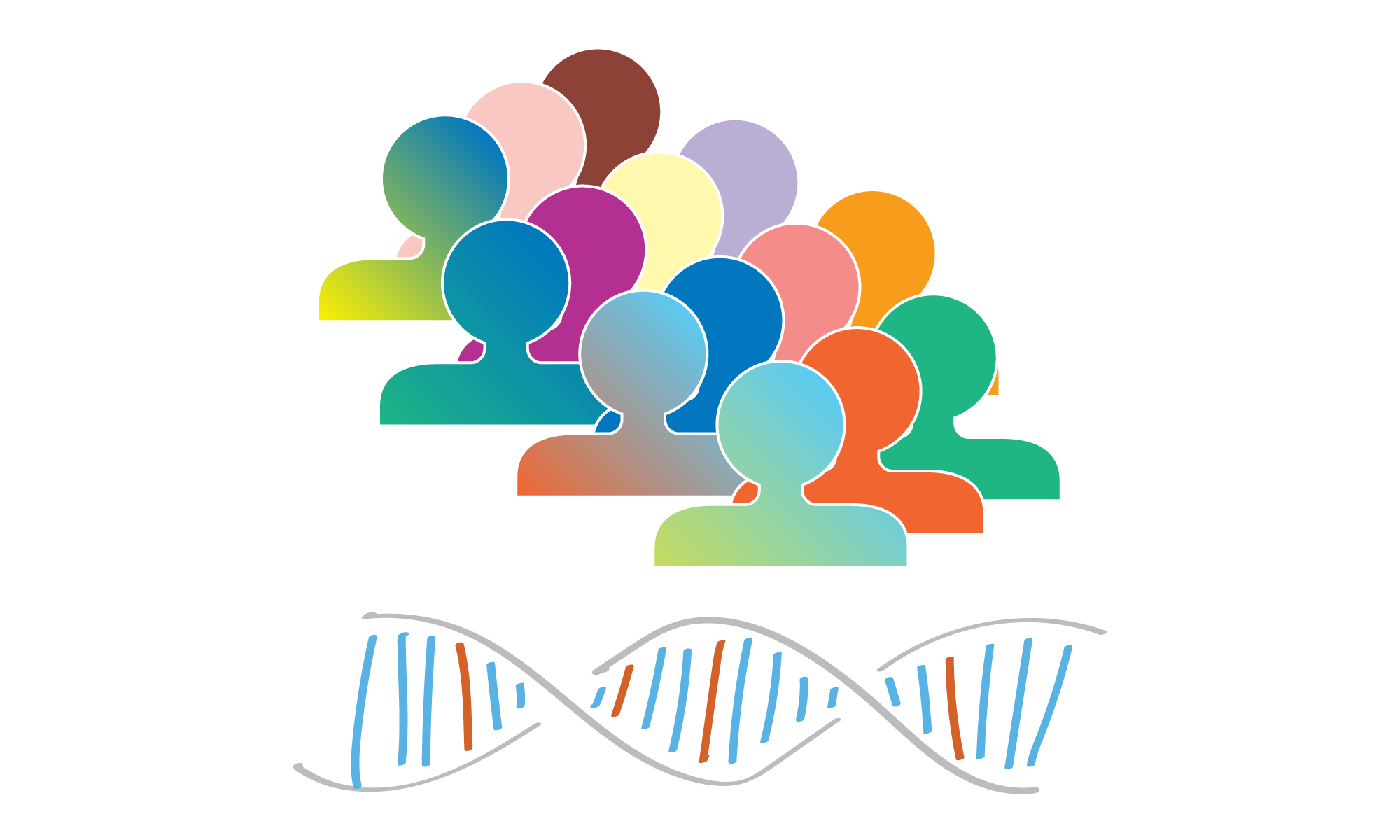
Predictive modeling of disease
Accurate prediction of disease risk using genomics enables earlier identification of individuals at elevated risk and facilitates more effective prevention strategies. However, existing genetic approaches show limited generalizability across cohorts and lack biological interpretation. We develop robust and biologically interpretable models using high-dimensional data.
Statistical genetics
Polygenic score
Genetic epidemiology
Active
Therapeutic target discovery
Low success rates in clinical trials remain a major challenge in drug development. We leverage our expertise and bring human genetic evidence to therapeutic target discovery and validation. We envision nominating therapeutic targets for disease subtypes based on their underlying biology.
Experiments by nature
Rare variant associations
Translational genomics
Select Publications
Dissecting Alzheimer's disease heterogeneity by cross-trait polygenic prediction
Led by Bill Li, this work introduces cross-trait polygenic prediction as a strategy for using phenome-wide PGS libraries in deeply phenotyped cohorts to reveal multiple polygenic …

PRISM: ancestry-aware integration of tissue-specific genomic annotations enhances the transferability of polygenic scores
In this study, led by Xiaohe (Lucy) Tian, we showed that ancestry-aware integration of tissue-specific genomic annotations enhances the transferability of polygenic scores (PGS).


Power of inclusion: Enhancing polygenic prediction with admixed individuals
We developed a polygenic score training approach that allows direct inclusion of admixed individuals without the need for local ancestry inference and showed ancestry-diverse …


Genetics of 35 blood and urine biomarkers in the UK Biobank
We analyzed the genetic basis of 35 blood and urine biomarkers in UK Biobank. We revealed that genetic effects on biomarkers inform the genetic basis of disease.

Rare protein-altering variants in ANGPTL7 lower intraocular pressure and protect against glaucoma
We identified an allelic series of rare protein-altering variants in ANGPTL7 that lower intraocular pressure and protect against glaucoma, highlighting ANGPTL7 as a therapeutic …
Teaching and training

Prof. Tanigawa teaches at UCLA. The lab provides training in statistical genetics, computational genomics, and clear scientific communication through coursework, research mentoring, and collaboration.
- Coursework at UCLA
- Training in statistical genetics and computation
- Mentorship across career stages
- Reproducible and clear scientific communication
News
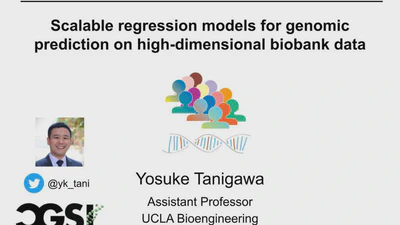
Yosuke presents at CGSI 2026
Yosuke Tanigawa presented at CGSI 2026, the Computational Genomics Summer Institute 2026.
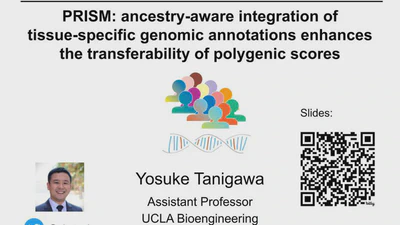
Yosuke presents at CGSI 2026 Retreat
Yosuke Tanigawa presented at CGSI 2026 Retreat, the Computational Genomics Summer Institute 2026.
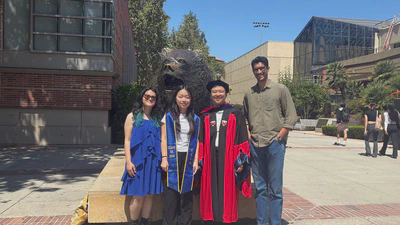
Congratulations to Tanya Wang on completing her MS in Biostatistics
Tanya Wang graduated from UCLA with an MS in Biostatistics and will continue her next chapter at Yale.
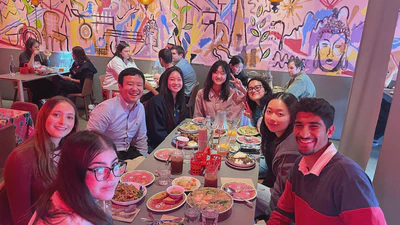
Tanigawa Lab Spring 2026 social
We had a social gathering to celebrate the near completion of the Spring 2026 quarter.

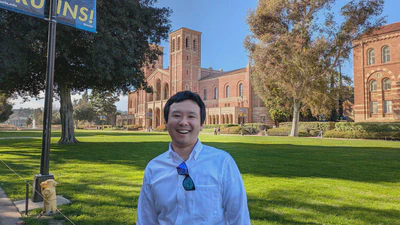
UCLA Tanigawa Lab is recruiting (2026)
The Tanigawa Lab at UCLA is recruiting students and postdoctoral researchers in statistical genetics, computational genomics, and precision medicine.
Contact Us
We are part of the Department of Bioengineering and are affiliated with the Bioinformatics Interdepartmental Program at UCLA.
Location
The UCLA Tanigawa Lab
Department of Bioengineering
University of California, Los Angeles
Engineering V, Room 5121E
410 Westwood Plaza
Los Angeles, CA 90095
United States
Office Hours
Meetings by appointment
Connect with Us
For non-recruiting inquiries, please contact the PI by email. The email address is available in the UCLA directory: https://www.directory.ucla.edu/.
Prospective Members
For recruiting, please follow the instructions on the recruiting page. We will not respond to inquiries from those who ignore the instructions.
View Open Positions